
In today’s broadband market, the word fiber gets used a lot. But not all fiber is the same — and not all networks delivering “fiber internet” are built equally.
At VNET, we believe Erie deserves transparency. If you’re comparing internet providers and see the phrase “fiber powered,” it’s important to understand what that really means — and how it differs from true 100% Fiber-to-the-Home service.
VNET Fiber is the ONLY 100% fiber-to-the-home internet option in Erie.
You may hear competitors claim they’re “fiber powered,” —but don’t be fooled. These are attempts to disguise their use of hybrid fiber-coaxial cables (HFCs), which run fiber to a neighborhood hub and then rely on traditional copper lines to reach your home, causing congestion and slower speeds.
VNET Fiber: Erie’s Only True Fiber-to-Home Network
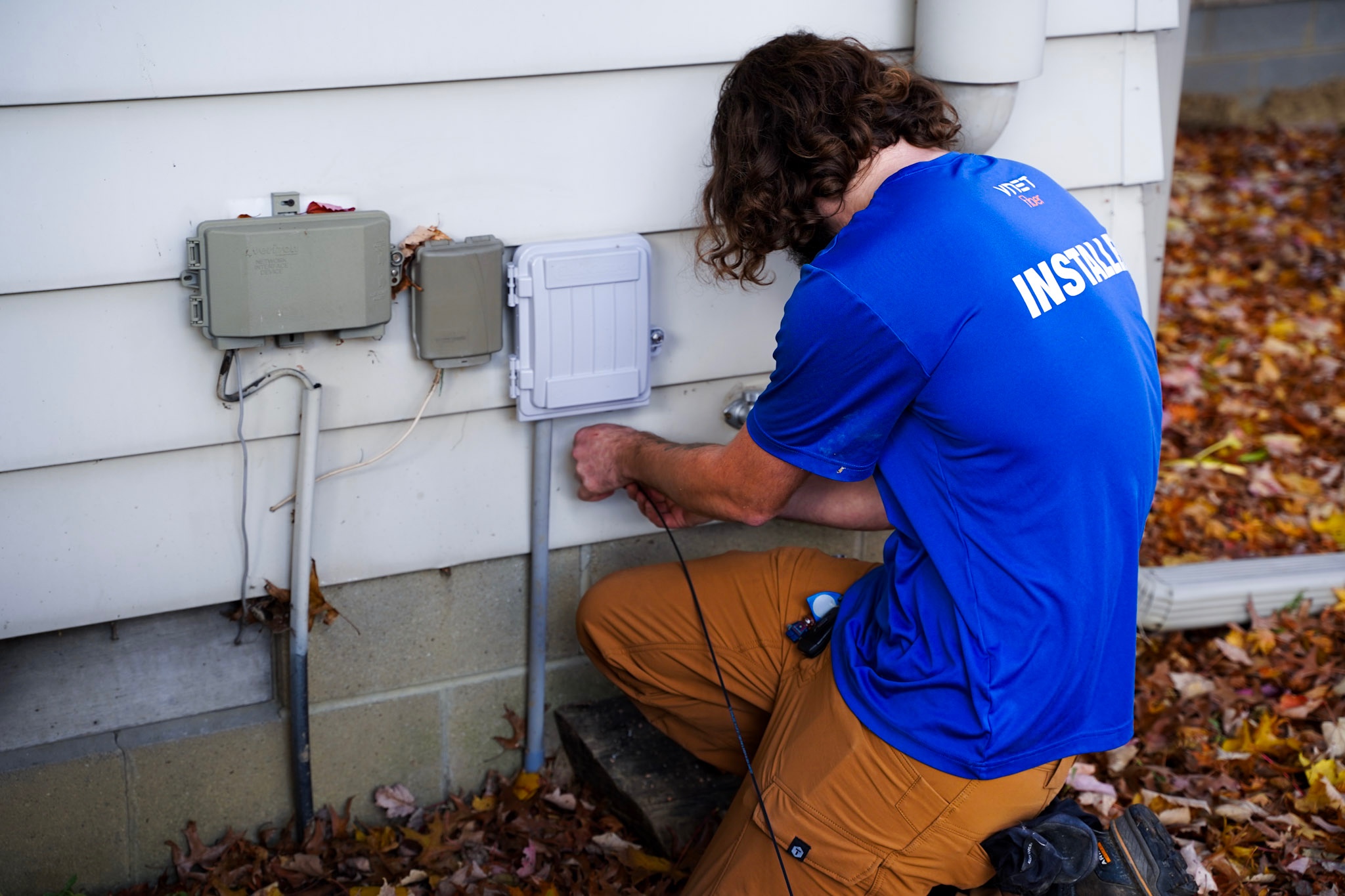
Fiber-to-the-Home (FTTH) is exactly what it sounds like: a dedicated fiber optic line running from our network directly into your residence. There are no copper lines involved in the final connection. No shared coaxial infrastructure. No last-mile compromises.
Fiber optic technology transmits data using pulses of light rather than electrical signals. That difference isn’t just technical — it’s transformational. Light-based transmission allows dramatically higher bandwidth capacity, lower latency, and far greater signal integrity over long distances.
For homeowners and businesses in Erie, that translates into symmetrical upload and download speeds. Uploading large files, hosting video meetings, gaming online, backing up data to the cloud, and streaming in ultra-high definition all happen with the same consistency and reliability. You don’t experience the slowdown that often comes with asymmetrical systems where upload speeds lag behind.
Just as important, fiber infrastructure is built for the future. As technology evolves and bandwidth demands increase, fiber networks can be upgraded without replacing the entire physical system. The line installed today is capable of supporting tomorrow’s innovations.
What “Fiber Powered” Really Means
When competitors advertise “fiber powered” internet, they are typically referring to a Hybrid Fiber-Coaxial (HFC) network. In this setup, fiber runs to a central neighborhood hub or node. From that point forward, traditional copper coaxial cables carry the signal into individual homes.
While this model incorporates some fiber in the broader network, the connection into your home still relies on dated copper infrastructure. Copper-based systems were originally designed for cable television. While functional, they are more susceptible to signal degradation, electrical interference, and congestion. Speeds can fluctuate during peak usage times when many households are online simultaneously.
Upload speeds in these systems are also typically much lower than download speeds. That imbalance may have worked years ago when internet usage was mostly passive consumption. Today’s digital environment — remote work, virtual learning, cloud computing, content creation, smart home devices — requires strong two-way performance.
Simply put, “fiber powered” is not the same as 100% fiber-to-the-home. It is a hybrid solution built on older infrastructure.
Why Infrastructure Matters in Erie
In a region where reliability matters year-round, network durability is critical. Fiber is not susceptible to electromagnetic interference and maintains signal quality more effectively than copper-based systems. It is engineered for stability, consistency, and growth.
As remote work, digital learning, telehealth, streaming, and connected devices become permanent parts of daily life, the demand for dependable two-way bandwidth continues to accelerate. The infrastructure behind your internet connection directly determines how well your home or business can keep up.
Erieites understand the difference between something built to last and something built to compete on advertising language.
Stay Connected with VNET
Stay up to date with all things tech by following VNET Fiber on LinkedIn and Facebook. Join us on our exciting journey as we continue to expand our VNET Fiber network across Erie County.